Fall ball is mostly wrapped up around the country, and it taught us a few things about some of the teams in the state of Michigan.
Detroit
Results: Detroit 7, Denison 10
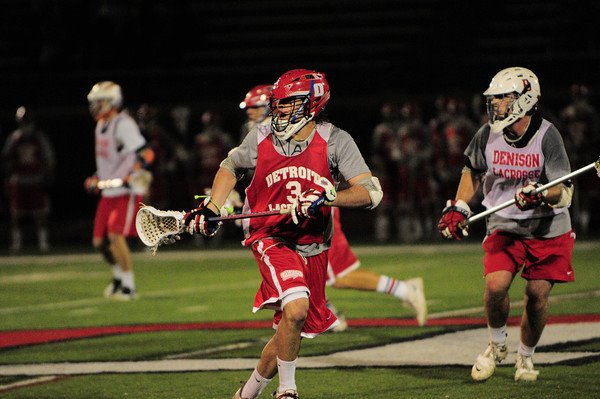
The Detroit/Denison scrimmage
The result of the game tells us a little bit about Detroit: they don’t have the depth to continue having their recent run of success (albeit a run of success that lasted the second half of one season – one win away from the NCAA Tournament is impressive nonetheless) if they have many starters go down.
Their top line players – particularly guys like Adams, Tim Lehto, and AJ Levell, none of whom played against Denison – obviously have the talent to get to the cusp of the NCAA Tournament. Add in a guy like Joel Matthews (a star in 2010 who didn’t play last year or in the Denison scrimmage), and they’ve even added to it. However, the team isn’t deep enough to handle any significant losses due to injury.
Playing deep into the bench showed that, at least in the fall, some of the depth players aren’t nearly to the level to step up and take key roles this spring. That shouldn’t be an issue during the regular season, as long as the Titans can stay healthy.
Michigan
Results: Michigan 10, Providence 11 (OT)
Michigan 5, St. Joseph’s 9
Michigan 2, Towson 15
The Wolverines had a lot more question marks going into fall ball. Unlike Detroit, they’d never before been a D-1 team, and had to show that they belong on that level. The earliest indication, an overtime loss to Providence, seemed to indicate that they were. Aside from some unforced errors, they played competitively with the Friars.
After that, however, things didn’t go so well. The Wolverines showed that they have a long way to go before they’ll be able to compete with the big boys. Most reports out of the Nick Colleluori Classic mentioned sloppy play, poor defense, and the Wolverines simply not being ready to play on the D-1 level.
Michigan started further back than every other Division-1 team, so they also have a chance to make more rapid progress than any other team at the level. Like Detroit, they don’t have the depth of teams that are recruiting All-Americans year-in and year-out, and in fact probably have even less (the Titans have had a few years of recruiting to build a roster), but their players could come on until the spring.
The coaches are installing new systems on each side of the ball, and once the players have a better understanding, they should be able to take a step forward. Still, this roster is a little further behind than I was expecting, and barring massive improvement, it should be a tough first year in Ann Arbor.
MCLA
As little as fall ball tells us about NCAA teams (which is little indeed), I think we know even less about MCLA teams. There are more variables in terms of roster turnover, disparities in competition faced, etc.
Grand Valley State again looks like a superpower in MCLA-2, as does cross-town rival Davenport. The CCLA-2 is strong as ever.
Michigan State only scrimmaged MCLA-2 Dayton (as far as I can tell), but looked solid. We didn’t learn a whole lot about the Spartans, from my understanding.
Central Michigan and Western Michigan are both looking to take the next step in the CCLA-1 with Michigan’s departure to the NCAA, and it sounds like Central has some work to do before the spring.
Any reports I missed? Feel free to share them in the comments, and as always you can reach me on Twitter @GreatLaxState or via e-mail at t.w.sullivan1@gmail.com.
17 Responses to Fall Ball: What We Learned